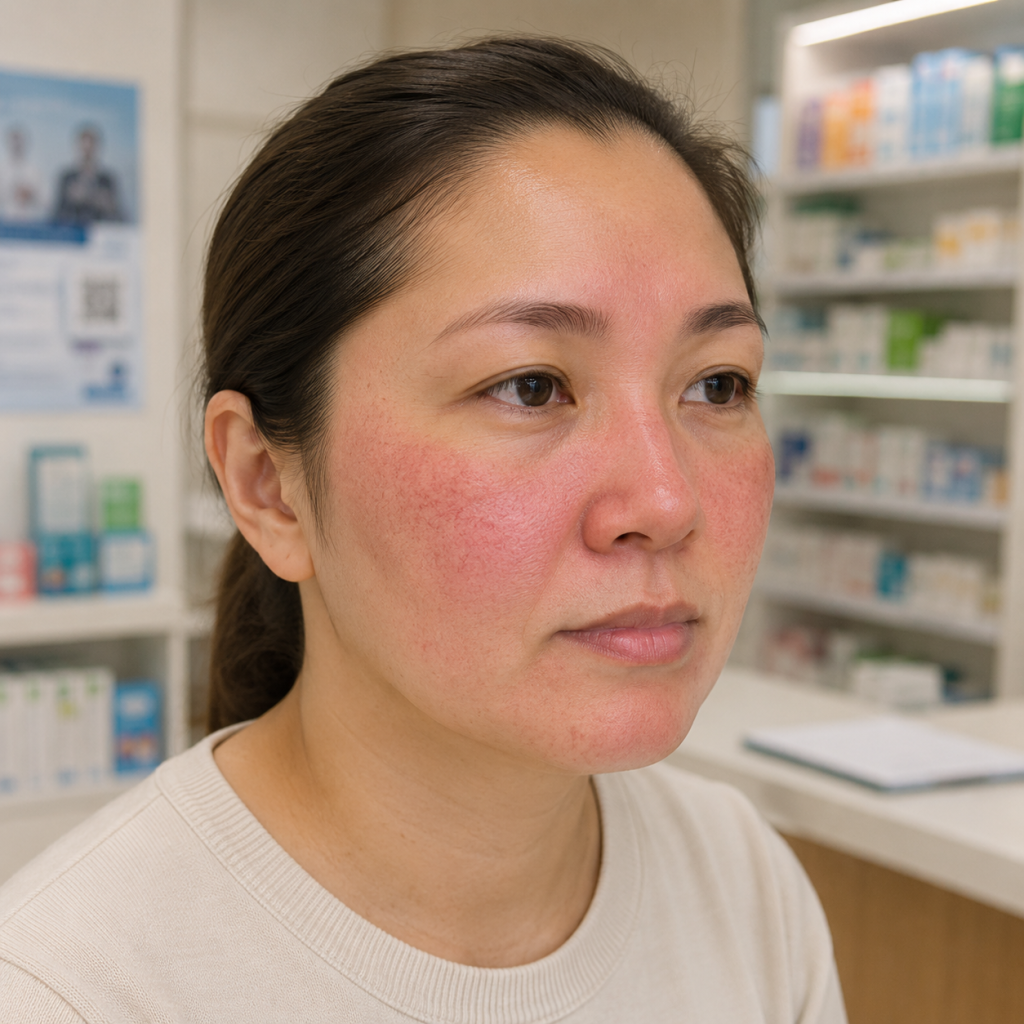
What Is It?
Rosacea is a long-term inflammatory skin condition that mainly affects the face. It often causes facial redness, flushing, visible small blood vessels, sensitive skin, and sometimes acne-like bumps.
Rosacea is usually not dangerous, but it can be persistent, uncomfortable, and emotionally frustrating. It is not contagious and is not caused by poor hygiene. Symptoms often come and go over months or years, with flare-ups triggered by personal factors.
Rosacea is usually considered when redness or flushing keeps returning on the central face, especially the cheeks, nose, chin, and forehead. Some people may also experience burning, stinging, dryness, swelling, or eye irritation.
When rosacea affects the eyes, it is sometimes called ocular rosacea. Eye symptoms may include gritty eyes, redness, dryness, irritation, light sensitivity, or blurred vision.
Other conditions can look similar, including acne, eczema, allergic contact dermatitis, seborrhoeic dermatitis, lupus rash, skin infection, heat rash, or sensitivity to skincare products.
Why Rosacea Is So Common
Rosacea is common because facial skin is regularly exposed to sunlight, heat, skincare products, wind, food triggers, alcohol, stress, and temperature changes. These factors can affect blood vessels and skin inflammation in people who are prone to rosacea.
It often starts in adults, commonly after 30 years old, although symptoms can appear earlier. People often search for rosacea because facial redness can be mistaken for acne, allergy, sunburn, sensitive skin, or repeated irritation.
What Causes It?
The exact cause of rosacea is not fully understood. It is linked to inflammation, blood vessel sensitivity, skin barrier changes, and individual triggers.
Triggers do not cause rosacea by themselves, but they may worsen symptoms in people who are prone to it.
Common Causes and Triggers
Blood vessel sensitivity
Facial blood vessels may react strongly to heat, alcohol, spicy food, exercise, hot drinks, or emotional stress, causing flushing or redness.
Sunlight and heat
Sun exposure, hot weather, saunas, warm rooms, and sudden temperature changes may trigger flare-ups.
Skin barrier sensitivity
Rosacea-prone skin may sting, burn, or react easily to harsh cleansers, fragranced products, scrubs, strong acids, or frequent product switching.
Inflammation and skin microbes
Immune activity, skin inflammation, and organisms that normally live on the skin may contribute in some people.
Family tendency and age
Rosacea can run in families and is more often seen in adults, especially between about 30 and 60 years old.
Rosacea is different from acne. Rosacea bumps can look like acne, but blackheads and whiteheads are more typical of acne. Rosacea more often involves flushing, persistent redness, visible blood vessels, and sensitive skin.
What Should You Do?
If you suspect rosacea, first observe when redness or flushing happens and what triggers it. Notice whether symptoms appear after sunlight, heat, spicy food, alcohol, stress, exercise, hot drinks, skincare products, or weather changes.
What to Observe First
Pay attention to:
- Whether redness is temporary or becoming persistent
- Whether flushing affects the cheeks, nose, chin, or forehead
- Whether there are visible small blood vessels
- Whether there are acne-like bumps without blackheads or whiteheads
- Whether the skin burns, stings, feels dry, or reacts easily
- Whether the eyes feel gritty, red, painful, dry, or light-sensitive
- Whether symptoms are affecting confidence, sleep, work, or daily life
How to Tell If It Is Mild, Moderate, or Severe
Mild rosacea may cause occasional flushing, facial redness, or sensitivity without major discomfort.
Moderate rosacea may cause more persistent redness, visible blood vessels, acne-like bumps, burning, stinging, or recurring flare-ups.
Severe or concerning rosacea may involve eye symptoms, painful skin, swelling, thickened skin around the nose, widespread inflammation, or major emotional distress.
How Is It Usually Managed?
Rosacea is usually managed by identifying triggers, protecting sensitive skin, avoiding harsh skincare, and seeking advice when symptoms are persistent or worsening. It usually needs ongoing awareness rather than a one-time quick fix.
Harsh scrubs, strong acids, fragranced products, and frequent product switching can worsen sensitive rosacea-prone skin.
A pharmacist can help assess whether symptoms sound like rosacea, acne, eczema, allergy, or irritation from skincare products. They can also advise when medical review is safer, especially if the eyes are involved.
Ask a Pharmacist If Unsure
Ask a pharmacist if facial redness keeps recurring, the skin is sensitive, or you are unsure whether it is rosacea, acne, allergy, or irritation.
Seek medical advice earlier for eye symptoms, painful redness, symptoms affecting daily life, adults aged 65 years and above with new facial redness, or anyone with a rash that is one-sided, rapidly worsening, infected-looking, or associated with other illness symptoms.
When to See a Doctor
See a doctor or dermatologist if rosacea-like symptoms are linked with:
- Eye pain, red eye, gritty eye, blurred vision, or light sensitivity
- Sudden or rapidly worsening facial redness
- Severe swelling, pain, warmth, or pus
- Rash mainly on one side of the face
- Fever or feeling unwell
- Thickened skin, especially around the nose
- Symptoms that persist or worsen for more than 2 to 4 weeks
- Symptoms causing significant emotional distress
- Rash with joint pain, mouth ulcers, or unusual tiredness
Quick Summary
- Rosacea is a long-term inflammatory skin condition mainly affecting the face.
- It can cause flushing, facial redness, visible blood vessels, sensitive skin, and acne-like bumps.
- It is not contagious and is not caused by poor hygiene.
- Triggers may include sunlight, heat, stress, alcohol, spicy food, hot drinks, wind, and irritating skincare.
- Seek medical advice if eye symptoms, severe swelling, pain, pus, one-sided rash, or persistent symptoms occur.
FAQ
What is rosacea?
Rosacea is a long-term inflammatory skin condition that mainly affects the face and causes redness, flushing, sensitivity, visible blood vessels, and sometimes acne-like bumps.
Is rosacea serious?
Rosacea is usually not dangerous, but it can persist, affect confidence, and sometimes involve the eyes. Eye pain, blurred vision, red eye, or light sensitivity should be assessed.
Is rosacea contagious?
No. Rosacea is not contagious and cannot spread from person to person.
Can rosacea affect the eyes?
Yes. Rosacea can affect the eyes, causing redness, grittiness, dryness, irritation, light sensitivity, or blurred vision. Eye pain or vision changes need medical advice.
How long does rosacea last?
Rosacea is usually long-term. Symptoms may come and go over months or years, with flare-ups triggered by personal factors.
Can rosacea go away on its own?
Rosacea may calm down between flare-ups, but it often returns. Persistent or worsening symptoms should be assessed.
Is rosacea the same as acne?
No. Rosacea can cause acne-like bumps, but blackheads and whiteheads are more typical of acne. Rosacea often involves flushing, redness, visible blood vessels, and sensitive skin.
When should I see a doctor for rosacea?
See a doctor if symptoms involve the eyes, persist for more than 2 to 4 weeks, worsen quickly, cause severe swelling or pain, include pus, affect one side of the face, or cause significant distress.