Written by: Xuan Jay Soo (PRP), 4 June 2026.
Table of Contents
Quick Answer
Non-drowsy antihistamines are allergy medicines that are less likely to make you sleepy compared with older drowsy antihistamines. They are commonly used for daytime allergy symptoms such as sneezing, clear runny nose, itchy eyes, watery eyes, hives, and allergy-related itching.
However, “non-drowsy” does not mean zero drowsiness. Some people may still feel sleepy, tired, slow, or less alert, especially with cetirizine. This matters if you drive, ride a motorcycle, work, study, operate machinery, or care for others.
Customers may ask by brand name, but the active ingredient is what matters most for checking suitability, duplication, and side effects.
| Antihistamine | Common Use Context | Drowsiness Note |
|---|---|---|
| Cetirizine | Allergic rhinitis, itchy skin | May still cause drowsiness in some people |
| Desloratadine | Seasonal and Perennial allergic rhinitis, Chronic hives | Less-drowsy option; response varies by person |
| Bilastine | Itchy skin, Allergic rhinitis, hives | Less sedating for many people; follow product timing instructions |
| Loratadine | Allergic rhinitis (1-3 hours onset), hives | Less sedating for many people |
| Fexofenadine | Allergic rhinitis (eyes +mild congestion), Chronic hives | Often considered when drowsiness is a concern |
What Are Non-Drowsy Antihistamines?
Non-drowsy antihistamines are allergy medicines designed to reduce histamine-related symptoms with less effect on brain alertness.
They are often part of the second-generation antihistamine group. These medicines generally enter the brain less strongly than older antihistamines, which is why they are less likely to cause sleepiness.
They may help symptoms such as sneezing, clear runny nose, itchy nose, itchy eyes, watery eyes, hives, and some allergy-related itching. They do not cure allergy permanently, and they do not remove the trigger.
In pharmacy practice, people often ask for non-drowsy antihistamines because they need to function during the day. They may say, “I want something not too strong,” or “I cannot feel sleepy because I need to drive or work.”
Why Are They Called Non-Drowsy?
They are called non-drowsy because they are less likely to cause sleepiness compared with older antihistamines such as chlorpheniramine or diphenhydramine.
The word can be slightly misleading. A better term is often less-drowsy antihistamines because some people still experience drowsiness.
Cetirizine is a common example. Many people take it without feeling sleepy, but some patients do feel tired, drowsy, or slow after taking it. This does not mean the medicine is dangerous for everyone, but it means personal response matters.
For someone who drives, rides a motorcycle, works with machinery, studies, or has safety-sensitive duties, even mild drowsiness can matter.
Coffee or kopi may make someone feel more awake, but it does not guarantee safe reaction time if the medicine causes drowsiness. Alcohol may make drowsiness worse and reduce alertness.
How Do Non-Drowsy Antihistamines Work?
Non-drowsy antihistamines reduce the effect of histamine at H1 receptors. Histamine is a body chemical involved in allergy symptoms.
When histamine is released during an allergic reaction, it can contribute to sneezing, runny nose, itchy eyes, watery eyes, redness, swelling, hives, and itchy skin.
By blocking histamine’s effect, non-drowsy antihistamines may reduce these symptoms. They often work better for sneezing, itching, watery eyes, and clear runny nose than for a heavy blocked nose.
A blocked nose can involve swelling and inflammation beyond histamine alone. This is why a person with severe or year-round allergic rhinitis may not get enough relief from antihistamines alone.
Year-round symptoms are sometimes called perennial allergic rhinitis. In this situation, the next step may involve identifying triggers and considering other treatment options, rather than repeatedly changing antihistamines.
When Are Non-Drowsy Antihistamines Usually Used?
Non-drowsy antihistamines are commonly used for mild to moderate allergy-related symptoms.
They may be used for allergic rhinitis, where symptoms include sneezing, clear runny nose, itchy nose, and watery eyes. They may also be used for allergic conjunctivitis, especially when the eyes are itchy and watery rather than painful.
They are also commonly used for hives, also called urticaria. Hives are raised, itchy patches or wheals that can appear and disappear. Some people also use non-drowsy antihistamines for allergy-related itchy skin or localised insect bite reactions.
However, they are not suitable for every itch or rash. Eczema itch, scabies, fungal infection, skin infection, widespread rash, painful rash, or rash with fever may need a different assessment.
Common Non-Drowsy Antihistamines in Pharmacy Practice
In Malaysia, common non-drowsy or less-drowsy antihistamines include cetirizine, desloratadine, bilastine, loratadine, and fexofenadine.
Customers may ask by active ingredient or by brand name. The active ingredient is what matters most for safety checking because different brands may contain the same medicine.
Cetirizine is widely used and commonly requested. It may help allergic rhinitis, hives, and allergy-related itching, but it is also the one many patients mention when they feel unexpectedly drowsy.
Desloratadine is related to loratadine and is used for allergic rhinitis and hives. It may be chosen as a less-drowsy option in some situations, but suitability still depends on the patient, symptoms, other medicines, and medical history.
Bilastine is another less-drowsy option used for allergic rhinitis and hives. Product instructions matter, especially around timing and food.
Loratadine and fexofenadine are also commonly used less-drowsy antihistamines. Some people tolerate one better than another, so individual response matters.
Pharmacist’s Real-Life Perspective
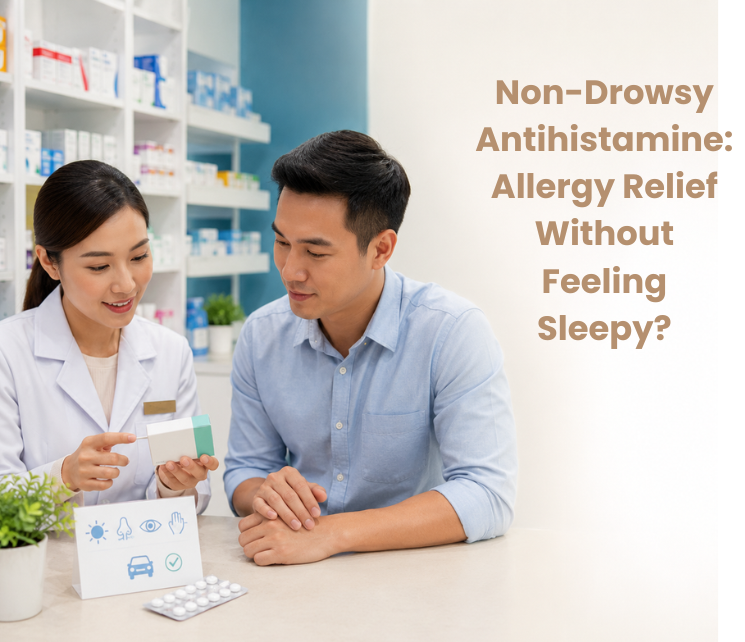
In a community pharmacy setting, a customer asking for a non-drowsy antihistamine is often trying to avoid feeling “too tired”, “too sleepy”, or “too strong”.
This matters in Malaysia because many people drive, ride motorcycles, work long hours, attend school, operate machines, or need to stay alert. Drowsiness can increase accident risk, especially on the road or at work.
A pharmacist may ask what symptom the person is treating. Is it sneezing and runny nose? Itchy eyes? Hives? General itch? A rash? Swelling? The answer matters because antihistamines help best when histamine is a major driver of the symptom.
If a non-drowsy antihistamine is not working, taking two tablets or combining antihistamines is not the automatic solution. It may mean the diagnosis is wrong, the allergic reaction is more severe, the trigger is still present, or the condition needs a different treatment.
Taking antihistamines regularly does not desensitise the body to allergens. They may control symptoms while the person is exposed to allergens, but they do not train the immune system to stop reacting.
If symptoms return often, the next step is not only changing tablets. It is also identifying the trigger, such as dust mites, pets, mould, workplace exposure, pollen, or air-conditioning.
For frequent allergic rhinitis, some patients may need other options, such as trigger control, saline rinse, nasal spray treatment, or doctor/pharmacist reassessment, rather than relying on repeated antihistamine use alone.
Who Needs Extra Caution?
Older adults aged 65 years and above should be cautious because even mild drowsiness can increase fall risk, confusion, poor balance, and accidents. They are also more likely to take multiple medicines.
People with kidney or liver disease may need suitable antihistamine selection or dosing advice. This is important because some antihistamines are cleared through the kidneys or liver.
Pregnant or breastfeeding women should ask a pharmacist or doctor before choosing an antihistamine. Children under 2 years old need professional advice because not all antihistamines are suitable, and dosing depends on age, weight, product type, and symptoms.
People with asthma or wheezing should not rely on antihistamines alone when breathing symptoms are present. If allergens trigger wheezing, asthma treatment and medical review may be needed.
People with frequent allergic reactions should also be assessed. Repeated symptoms may mean the trigger has not been identified or avoided.
When Should You Seek Medical Advice?
Seek medical advice if symptoms are severe, painful, widespread, worsening, or not improving.
Get urgent help if there is breathing difficulty, wheezing, chest tightness, swelling of the lips, tongue, face, throat, or eyes, faintness, collapse, severe dizziness, or signs of anaphylaxis.
A rash with fever, blistering, peeling, severe swelling, or pain should not be treated as a simple allergy. Eye pain, light sensitivity, vision changes, or thick discharge also needs assessment.
If non-drowsy antihistamines are repeatedly not helping, do not simply increase the dose or combine medicines. Reassess the cause with a pharmacist or doctor.
Quick Summary
Non-drowsy antihistamines are better described as less-drowsy antihistamines. They are commonly used for daytime allergy symptoms.
They may help sneezing, clear runny nose, itchy eyes, watery eyes, hives, and some allergy-related itching.
Cetirizine can still cause drowsiness in some people. This matters for driving, motorcycle riding, work, school, machinery use, and elderly fall risk.
Taking antihistamines regularly does not desensitise the body to allergens. Frequent symptoms should prompt trigger identification and reassessment.
If symptoms do not improve, taking more is not always safe or useful. The diagnosis, trigger, severity, and treatment choice may need reassessment.
FAQ
1. What are non-drowsy antihistamines?
Non-drowsy antihistamines are allergy medicines that are less likely to cause sleepiness than older antihistamines. They are commonly used for daytime allergy symptoms.
2. Does non-drowsy mean no drowsiness at all?
No. Non-drowsy means less likely to cause drowsiness, not zero risk. Some people may still feel sleepy, especially with cetirizine.
3. Which non-drowsy antihistamines are commonly used?
Common examples include cetirizine, desloratadine, bilastine, loratadine, and fexofenadine.
4. Why does cetirizine make me sleepy?
Some people are more sensitive to cetirizine. Although it is less sedating than older antihistamines, it can still cause drowsiness in some users.
5. Can I drive after taking a non-drowsy antihistamine?
Only if you know it does not make you sleepy, dizzy, slow, or less alert. Try to understand your personal response before driving or riding a motorcycle.
6. Can I take two non-drowsy antihistamines if one does not work?
Do not take two antihistamines or increase the dose unless advised by a healthcare professional. The problem may need reassessment rather than a higher dose.
7. Can non-drowsy antihistamines treat a blocked nose?
They may help allergy-related symptoms, but they often help sneezing, itching, and clear runny nose more than heavy blocked nose. Persistent congestion may need other treatment.
8. Do non-drowsy antihistamines desensitise my allergy?
No. They may reduce symptoms while you are exposed to allergens, but they do not desensitise your immune system. Frequent symptoms may need trigger control or further assessment.
9. Are non-drowsy antihistamines suitable for elderly people?
They may be preferred over drowsy antihistamines, but elderly people aged 65 years and above still need caution because drowsiness, falls, and medicine interactions can still happen.
10. When should I ask a pharmacist or doctor?
Ask for advice if symptoms are severe, painful, widespread, not improving, affecting breathing, linked with eye pain or vision changes, or if the person is elderly, pregnant, breastfeeding, under 2 years old, or taking multiple medicines.
Disclaimer
This content is for educational purposes only and does not replace professional medical advice. Always consult a doctor or pharmacist for personalised guidance.