Written by: Xuan Jay Soo (PRP), 12 June 2026
Table of Contents
Quick Answer
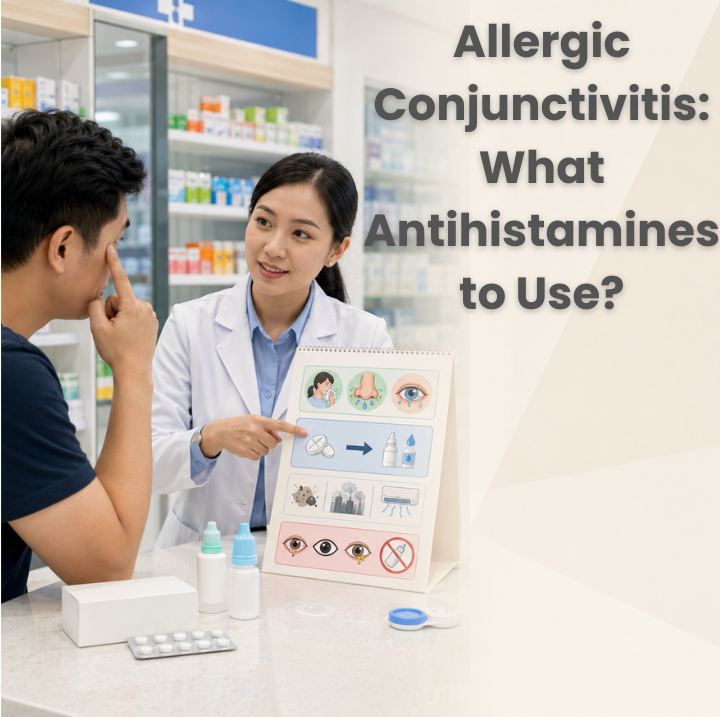
Antihistamines can help allergic conjunctivitis, especially when the main symptoms are itchy eyes, watery eyes, mild redness, and clear transparent discharge. Many customers do not say “allergic conjunctivitis”. They may simply say their eyes are itchy, watery, red, sensitive to dust, irritated by air-conditioning, or uncomfortable during haze.
Allergic conjunctivitis is an eye allergy that makes the eyes itchy, watery, red, or irritated after contact with triggers such as dust, haze, pets, pollen, air-conditioning, fragrance, smoke, mould, workplace dust, cleaning products, makeup, skincare products, or dryness.
It is not the same as bacterial eye infection, and it does not always need antibiotic or steroid eye drops. The right choice depends on the symptom pattern, trigger, contact lens use, and whether there are warning signs such as eye pain, vision changes, fever, severe redness, swelling, crusting, or coloured discharge.
Oral antihistamines may help when eye allergy comes together with sneezing, runny nose, itchy nose, or other allergy symptoms. Allergy eye drops may be better when the problem is mainly in the eyes.
What Is Allergic Conjunctivitis?
Allergic conjunctivitis happens when the thin clear layer covering the white part of the eye and inner eyelids becomes irritated by an allergy trigger. The body reacts to the trigger and releases allergy chemicals such as histamine, which can cause itchiness, watering, redness, and irritation.
The most typical symptoms are itchy eyes, watery eyes, mild redness, and clear watery discharge. Both eyes are often affected, although one eye may feel worse than the other.
Some people also have allergic rhinitis at the same time. This means they may have itchy eyes together with morning sneezing, clear runny nose, itchy nose, post-nasal drip, or symptoms after dust and pollutants.
A pharmacist will usually ask whether the eye is itchy or painful, whether the discharge is clear or coloured, whether there is crusting, whether vision is affected, and whether the person wears contact lenses.
Allergy, Dryness or Irritation?
Not every itchy or watery eye is purely allergy. Air-conditioning, screen use, dry environments, smoke, haze, cosmetics, skincare products, cleaning products, and workplace dust can irritate the eyes and overlap with allergy symptoms.
Dry eyes may feel gritty, burning, tired, or watery. This sounds confusing, but dry eyes can sometimes water because the eye surface is irritated.
Allergy is more likely when itchiness is strong, discharge is clear and watery, both eyes are affected, and symptoms appear after triggers such as dust, pets, haze, pollen, or air-conditioning.
This is why a pharmacist should ask questions before recommending a tablet, eye drop, lubricant, or referral.
Allergy Eye Symptoms vs Eye Infection
A key clue for allergy is itchiness. If the eyes are itchy, watery, mildly red, and the discharge is clear and transparent, allergic conjunctivitis becomes more likely.
Clear watery discharge is more consistent with allergy or irritation, while thick yellow or green discharge with crusting may suggest infection. Sticky eyelids on waking, fever, worsening redness, or feeling unwell also make simple allergy less likely.
A painful red eye should not be treated casually as allergy. Red eye with contact lens use also needs caution because contact lenses may increase the risk of more serious eye problems.
| Symptom Pattern | More Suggestive Of | What To Do |
|---|---|---|
| Itchy, watery eyes | Allergy | Pharmacist assessment may help |
| Clear transparent discharge | Allergy or irritation | Check triggers and severity |
| Thick yellow or green discharge | Infection possibility | Medical review may be needed |
| Crusting or sticky eyelids | Infection possibility | Avoid sharing towels or eye drops |
| Eye pain or vision change | More serious eye concern | Seek medical advice urgently |
| Red eye with contact lenses | Higher-risk situation | Remove lenses and get advice |
How Antihistamines Help Eye Allergy
When the eye reacts to an allergen, the body releases histamine. Histamine contributes to itching, watering, redness, and irritation.
Antihistamines help by blocking histamine activity. This can reduce allergy-related eye itching and watering. Some antihistamines are taken by mouth, while others are used directly as eye drops.
However, antihistamines do not remove the allergy trigger. If the person is still exposed to dust, pets, haze, smoke, air-conditioning dryness, or irritating cosmetics, symptoms may return.
Oral Antihistamines for Allergic Conjunctivitis
Oral antihistamines may be useful when eye allergy is part of a wider allergy pattern. For example, the person may have itchy watery eyes together with sneezing, clear runny nose, itchy nose, post-nasal drip, or skin allergy symptoms.
Some customers also prefer tablets because they are used to them, find them convenient, or have nose and eye symptoms together.
Common oral antihistamine options include loratadine, cetirizine, fexofenadine, and chlorpheniramine.
| Oral Antihistamine | Common Use Angle | Main Caution |
|---|---|---|
| Loratadine | Mild allergy symptoms, less-drowsy option | May not be enough for stronger symptoms |
| Cetirizine | Common option for itchy allergy symptoms | Can still cause drowsiness |
| Fexofenadine | Low-drowsiness option | Fruit juice and antacid timing may matter |
| Chlorpheniramine | Drowsy option, sometimes for night-time symptoms | Not a sleeping pill; avoid driving and alcohol |
Loratadine may suit mild symptoms and people concerned about drowsiness. Cetirizine may be chosen by patients who have used it before or who have itch-related symptoms. Fexofenadine may be considered when alertness is important or when another antihistamine has not been enough. Chlorpheniramine may sometimes be used when night-time allergy symptoms disturb rest, but it has higher drowsiness and safety cautions.
Oral antihistamines may not be the best choice when the problem is only in the eyes and the person wants local treatment. Some oral antihistamines may also make the eyes feel drier in certain people. If dryness, burning, or gritty sensation is the main complaint, lubricating eye drops may be more suitable than relying only on oral antihistamines.
Antihistamine Eye Drops and Local Eye Treatment
When the main complaint is itchy, watery eyes without much nose or skin allergy, eye drops may be more suitable. Eye drops act locally on the eye surface and may give more direct relief for ocular symptoms.
Examples of allergy eye drop ingredients that may be used depending on availability and suitability include olopatadine, ketotifen, and some cetirizine eye drop formulations. Some allergy eye drops work as antihistamines, while some also have mast cell stabilising effects. The right product depends on age, contact lens use, symptom severity, product availability, and pharmacist or doctor advice.
Mast cell stabilising eye drops may be useful when eye allergy keeps recurring, but they may take time to work and may be more preventive than instant. This is different from using a drop only when the eye suddenly feels itchy.
Lubricating eye drops, also called artificial tears, can support comfort by washing away allergens and reducing dryness. They may be helpful when air-conditioning, screen use, dust, or dryness contributes to irritation.
Not every eye symptom needs antibiotic or steroid eye drops. Antibiotics are for bacterial infection when appropriate. Steroid eye drops should not be started without proper medical advice, especially if there is pain, infection, contact lens-related redness, or vision changes.
Contact Lens Advice
Contact lens users need extra caution. If the eyes are red, painful, or irritated, remove contact lenses and avoid wearing them again until the eyes are assessed or symptoms have settled.
For mild allergy symptoms, some people may need to pause contact lens use until the eyes feel comfortable again. If eye drops are used, the person should check whether the drops are suitable for contact lens users.
A practical rule for suitable eye drops is to remove contact lenses before using the drops and wait before reinserting them. Many products advise waiting about 15 minutes, but the exact instruction depends on the eye drop. Contact lens users should always follow the product label or pharmacist advice.
Do not use random eye drops while wearing lenses. Do not share eye drops with family members.
Eye Drop Hygiene Tips
Good eye drop hygiene helps reduce contamination and irritation.
Wash your hands before using eye drops. Do not touch the dropper tip to the eye, eyelid, fingers, eyelashes, or any surface. Do not share eye drops with family members, even if the symptoms look similar.
Check the expiry date before using the bottle. Also check how long the eye drop can be used after opening, because some eye drops must be discarded within a specific period.
Use one bottle for one person. If the eye drop changes colour, becomes cloudy when it should not be, smells unusual, or causes worsening irritation, stop using it and ask for advice.
Non-Medicine Support
Simple steps can reduce irritation. Avoid rubbing the eyes because rubbing can worsen inflammation and may damage the eye surface.
A cold compress may help soothe itchy or puffy eyes. Use a clean cloth and avoid pressing hard on the eye.
Artificial tears may help wash away allergens and reduce dryness. Washing the face after outdoor exposure may also help, especially during haze, dusty work, or pet exposure.
People with recurring symptoms should look at triggers: bedroom dust, pillow and bedsheet hygiene, air-conditioning dryness, pets, workplace dust, smoke, fragrance, makeup, skincare, and cleaning products.
Pharmacist’s Real-Life Perspective
In pharmacy, customers often say “my eyes are itchy”, “my eyes are watery”, “my eyes are red”, or “I think I have eye infection”. They may not know the term allergic conjunctivitis.
The pharmacist will first check whether the discharge is clear and watery or coloured and sticky. Transparent watery discharge with itchiness and environmental triggers is more consistent with allergy. Coloured discharge, crusting, fever, eye pain, swelling, or vision changes need more caution.
The pharmacist also checks whether symptoms are only ocular or whether there are other allergy symptoms. If the person has itchy eyes plus sneezing and runny nose, oral antihistamines may help. If the symptoms are only in the eyes and the person does not wear contact lenses, an allergy eye drop or lubricating eye drop may be more suitable.
The pharmacist should also ask whether symptoms are improving or worsening. Eye symptoms that worsen, last too long, or involve pain, swelling, or vision changes should not be managed as simple allergy.
Safety Points to Remember
Less-drowsy oral antihistamines can still cause drowsiness in some people. Drowsy antihistamines are not stronger just because they make a person sleepy.
Avoid driving, motorcycle riding, operating machinery, or risky work if an oral antihistamine makes you sleepy or dizzy. Alcohol may increase drowsiness. Coffee or kopi does not guarantee safe reaction time.
Children, elderly people, pregnant or breastfeeding women, people with glaucoma, existing eye disease, recent eye surgery, kidney or liver disease, or multiple medicines should ask for advice before choosing oral antihistamines or eye drops.
Eye pain, light sensitivity, vision changes, very red eyes, thick discharge, or contact lens-related red eye should be reviewed properly, as these can be signs of more serious eye conditions.
FAQ
1. What antihistamine is best for allergic conjunctivitis?
There is no single best option for everyone. Oral antihistamines may help when itchy eyes come with sneezing or runny nose. Eye drops may be better when symptoms are mainly in the eyes.
2. Should I take tablets or use eye drops?
If you have eye symptoms plus nose allergy, tablets may help. If the problem is mainly itchy watery eyes, eye drops may provide more local relief.
3. Do antihistamines help itchy eyes?
Yes, antihistamines may help allergy-related itchy eyes by reducing histamine activity. However, painful eyes, vision changes, or thick discharge need medical review.
4. Is clear watery eye discharge normal in allergy?
Clear transparent watery discharge can happen with allergic conjunctivitis or irritation. Thick yellow or green discharge, crusting, or sticky eyelids may suggest infection or another problem.
5. Can allergic conjunctivitis cause red eyes?
Yes, mild redness can occur. Very red eyes, painful eyes, or red eyes with vision changes should not be treated as simple allergy.
6. Can I use antibiotic eye drops for eye allergy?
Antibiotic eye drops are not for simple allergy. They are used for bacterial infection when appropriate. Using the wrong eye drop may delay proper care.
7. Do I need steroid eye drops for allergic conjunctivitis?
Not usually for simple mild symptoms. Steroid eye drops should only be used under proper medical guidance because they can carry eye-related risks if used wrongly.
8. Can I wear contact lenses with allergic conjunctivitis?
It is safer to remove contact lenses if the eyes are red or irritated. If using eye drops, check whether the product is suitable for contact lens users and follow the waiting time before reinserting lenses.
9. Why are my eyes still itchy after taking an antihistamine?
Possible reasons include ongoing trigger exposure, dryness, contact lens irritation, wrong diagnosis, symptoms mainly needing eye drops, or another eye condition.
10. When should I see a doctor for red or itchy eyes?
See a doctor if there is eye pain, vision changes, light sensitivity, severe redness, swelling, thick discharge, fever, contact lens-related red eye, eye injury, symptoms after eye surgery, or symptoms that keep worsening.