Written by: Xuan Jay Soo (PRP), 13 June 2026
Table of Contents
This article is written according to this study from this paper.
Quick Answer
There is no single “best” antihistamine for everyone. The best choice depends on the main symptom, severity, drowsiness concern, previous response, safety factors, other medicines, and whether another treatment such as a nasal spray or eye drop may be more suitable.
In pharmacy, customers often ask for the “strongest” allergy medicine, the “non-drowsy one”, something that can help them sleep, or the best antihistamine for each symptom. This should be handled carefully because drowsy antihistamines are not sleeping pills.
“Stronger” does not mean “more drowsy”. A stronger treatment should mean better matched to the patient’s symptoms, supported by suitable evidence, and safer for the person’s daily activities.
Based on the allergic rhinitis comparison data, cetirizine ranked better than loratadine and fexofenadine for overall allergic rhinitis score and sneezing among the current cluster medicines. Fexofenadine ranked better for nasal itching, ocular symptoms, and some congestion-related scoring. Loratadine ranked lower in that evidence set, but it may still be useful for mild symptoms, lower drowsiness concerns, previous good response, and cost-conscious patients.
Chlorpheniramine was not included in the analysed allergic rhinitis effectiveness ranking, so it should mainly be compared from a real-life pharmacy and safety perspective.
Overall Comparison
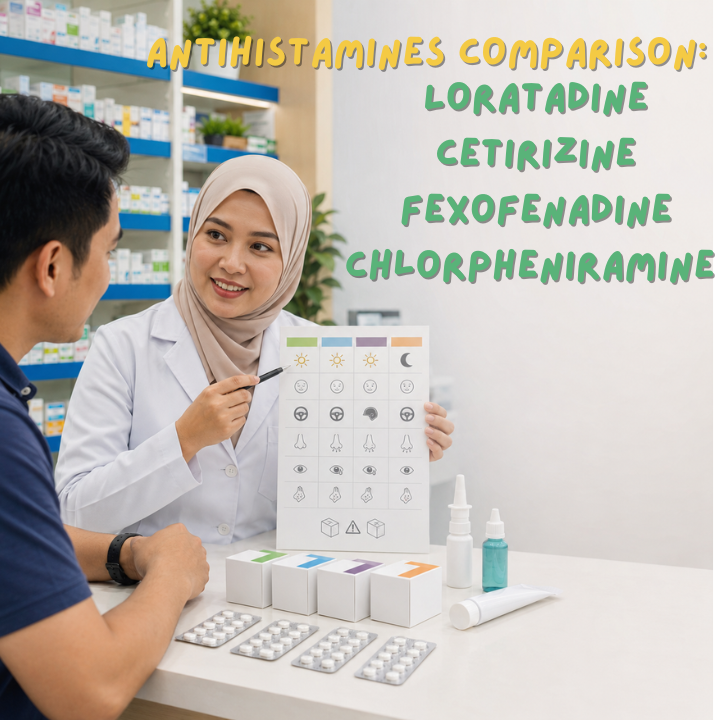
| Antihistamine | Practical Position | Main Caution |
|---|---|---|
| Cetirizine | Common first choice; may suit patients who want effective allergy relief | May cause drowsiness in some people |
| Loratadine | Mild symptoms, lower drowsiness concern, often cheaper option | May not be enough for stronger symptoms |
| Fexofenadine | More troublesome symptoms with lower drowsiness concern | Fruit juice and antacid timing may affect absorption |
| Chlorpheniramine | Older drowsy option, sometimes for night-time allergy symptoms | Not a sleeping pill; more side effects and safety cautions |
The evidence ranking helps compare likely effectiveness for allergic rhinitis symptoms, but it does not replace individual response, safety checks, or pharmacist assessment.
Cetirizine
Cetirizine is one of the most commonly requested antihistamines. Many customers know it by active ingredient or brand name, and some choose it because it has worked for them before.
In practical pharmacy use, cetirizine may be suitable when the patient wants effective relief for allergic rhinitis symptoms such as sneezing, clear runny nose, itchy nose, itchy eyes, watery eyes, hives, or allergy-related itch.
Based on the analysed allergic rhinitis ranking data, cetirizine performed better than loratadine and fexofenadine for overall allergic rhinitis symptom score and sneezing among the medicines in your current cluster.
However, cetirizine can still cause drowsiness in some people. Some customers describe this as heavy eyes, tiredness, or reduced focus. It may not be the best choice if the person needs to drive, ride a motorcycle, operate machinery, study, or stay alert for work.
Loratadine
Loratadine is commonly used as a less-drowsy option, especially for mild allergy symptoms. In real pharmacy practice, it may be suitable when the customer’s main concern is avoiding drowsiness, maintaining focus, or choosing a more affordable option.
If a patient says cetirizine makes them sleepy, loratadine may be considered. It may also suit mild allergic rhinitis, mild sneezing, clear runny nose, or general allergy symptoms when strong symptom control is not the main concern.
Based on the analysed allergic rhinitis data, loratadine ranked lower than cetirizine and fexofenadine for several allergic rhinitis symptom outcomes. This does not mean loratadine is useless. Loratadine may still be a reasonable option when symptoms are mild, drowsiness avoidance is important, cost matters, or the patient has previously responded well to it.
Fexofenadine
Fexofenadine may be considered when symptoms are more troublesome and the patient wants a lower-drowsiness option. It may be preferred when alertness is important, such as for driving, motorcycle riding, studying, office work, night-shift work, or machinery-related jobs.
Based on the analysed ranking data, fexofenadine performed well for nasal itching, ocular symptoms, and some congestion-related scores. In practical terms, it may be considered when symptoms are more troublesome than mild allergy, or when the patient wants less drowsiness than cetirizine may cause.
Fexofenadine has an important counselling point: fruit juice may reduce absorption, and some antacids may affect how well it works if taken too close together. It is usually better to take it with plain water and ask the pharmacist about timing if also using gastric medicines.
Chlorpheniramine
Chlorpheniramine is an older first-generation antihistamine. It is more likely to cause drowsiness than cetirizine, loratadine, or fexofenadine.
Chlorpheniramine was not part of the analysed allergic rhinitis effectiveness ranking, so it should not be described as stronger based on that evidence.
It may sometimes be considered for night-time allergy symptoms if suitable, especially when sneezing, runny nose, or itching disturbs rest. However, it should not be used casually to induce sleep. It is an allergy medicine with side effects, not a sleeping pill.
Chlorpheniramine can cause drowsiness, dry mouth, dry skin, blurred vision, constipation, urinary difficulty, dizziness, and fall risk in elderly people. It should be avoided before driving, motorcycle riding, alcohol, machinery work, or risky activity.
It is also not preferred for routine daily use unless advised.
Best Antihistamine by Symptom
| Main Symptom | Practical Direction |
|---|---|
| Sneezing | Cetirizine ranked well in the analysed allergic rhinitis data |
| Clear runny nose | Cetirizine or fexofenadine 180 mg may be considered based on evidence and suitability |
| Nasal itching | Fexofenadine ranked well in the analysed allergic rhinitis data |
| Itchy or watery eyes | Fexofenadine ranked well for ocular symptoms; eye drops may be better if symptoms are eye-only |
| Hives or itchy wheals | Cetirizine or fexofenadine may be considered; review triggers |
| Heavy blocked nose | Antihistamine alone may not be enough; nasal spray or decongestant assessment may be needed |
| Itchy skin | Check whether it is allergy, dry skin, eczema, fungal infection, scabies, or contact dermatitis |
Which Antihistamine Is Best by Situation?
| Situation | Practical Choice Direction |
|---|---|
| Wants effective allergy relief and can tolerate possible drowsiness | Cetirizine may be considered |
| Mild symptoms and wants lower drowsiness | Loratadine may be considered |
| More troublesome symptoms but wants lower drowsiness | Fexofenadine may be considered |
| Night-time allergy symptoms, drowsiness acceptable | Chlorpheniramine may be considered if suitable |
| Needs to drive, ride motorcycle, study or work | Prefer less-drowsy options; test response first |
| Mainly blocked nose | Antihistamine alone may not be enough |
| Mainly itchy watery eyes | Eye drops may sometimes be more suitable |
| Recurrent hives or itch | Trigger review or medical review may be needed |
Loratadine and fexofenadine are usually less drowsy, but individual response can vary. “Less-drowsy” does not guarantee zero drowsiness for every person.
Is Fexofenadine Stronger Than Cetirizine?
Not always. It depends on what symptom you are comparing.
From the analysed allergic rhinitis data, cetirizine ranked better for overall allergic rhinitis score and sneezing among your current medicines. Fexofenadine ranked better for nasal itching, ocular symptoms, and some congestion-related scores.
In real pharmacy terms, cetirizine may be preferred when the patient wants effective symptom relief and has tolerated it before. Fexofenadine may be preferred when symptoms are more troublesome but the person needs lower drowsiness and better alertness.
Is Loratadine Weaker?
Loratadine may be weaker for some patients, especially when symptoms are stronger or persistent. The analysed data also ranked loratadine lower than several other antihistamines for allergic rhinitis symptom reduction.
However, loratadine still has a place. It may be suitable for mild symptoms, patients who are sensitive to drowsiness, people who previously responded well to it, or those who want a cheaper less-drowsy option.
The key is not to call it “bad”. It is better to explain that it may be enough for mild allergy but may not be the best match for stronger symptoms.
Are Antihistamines Enough for Blocked Nose?
Antihistamines usually help sneezing, clear runny nose, itchy nose, itchy eyes, watery eyes, hives, and allergy-related itch better than heavy blocked nose.
If blocked nose, sinus pressure, poor sleep, post-nasal drip, or persistent nasal congestion is the main problem, step-up treatment may be needed.
Step-up therapy means moving from a simple allergy tablet to a treatment that better targets the main problem, such as a nasal spray for persistent blocked nose or eye drops for eye-only symptoms.
A decongestant may sometimes be considered in addition to antihistamines for short-term blocked nose relief, but it is not suitable for everyone. People with certain blood pressure, heart, thyroid, prostate, anxiety, insomnia, or medicine-interaction concerns should ask before using decongestants.
Decongestant nasal sprays should not be used long-term because overuse can worsen congestion. For persistent allergic rhinitis, a corticosteroid nasal spray, saline rinse, trigger control, or medical review may be more appropriate.
What Not To Do
Do not choose an antihistamine only because of brand name, colour, packaging, or because someone says it is “the strongest”.
Do not assume drowsy means stronger. Do not take two antihistamines together unless advised. Do not double the dose casually. Do not mix allergy medicine with cough or flu medicine without checking the active ingredients.
Do not use chlorpheniramine as a sleeping pill. Do not give adult antihistamines to children. Do not rely on coffee or kopi to cancel drowsiness. Alcohol may worsen drowsiness and should be avoided with sedating antihistamines.
Safety Groups That Need Extra Care
Children should only use age-appropriate antihistamines. Do not estimate adult doses or use drowsy antihistamines to make children sleep.
Elderly people have higher risk of drowsiness, confusion, urinary difficulty, constipation, blurred vision, and falls, especially with chlorpheniramine.
Pregnant or breastfeeding women, people with kidney disease, liver disease, glaucoma, prostate or urinary difficulty, epilepsy or seizure history, asthma or wheezing, and those taking many medicines should ask a pharmacist or doctor before choosing or switching antihistamines.
FAQ
1. Which antihistamine is best?
There is no single best antihistamine. Cetirizine, loratadine, fexofenadine, and chlorpheniramine each have different roles depending on symptoms, drowsiness risk, previous response, and safety factors.
2. Is cetirizine stronger than loratadine?
Cetirizine may be more effective for some symptoms, especially allergic rhinitis and itch-related symptoms, but it may cause more drowsiness in some people.
3. Is fexofenadine better than cetirizine?
Fexofenadine may be better when symptoms are more troublesome and lower drowsiness is important. Cetirizine may still be suitable if the patient has used it before and tolerated it well.
4. Is loratadine or fexofenadine better?
Loratadine may suit mild symptoms and may be cheaper. Fexofenadine may be preferred for more troublesome symptoms or when alertness is important.
5. Is chlorpheniramine stronger?
Not necessarily. Chlorpheniramine is more drowsy, but drowsiness does not mean stronger allergy control. It is not a sleeping pill.
6. Which antihistamine is best for blocked nose?
Antihistamines may not be enough for heavy blocked nose. Nasal spray assessment or short-term decongestant advice may be more suitable depending on the patient.
7. Which antihistamine is best for itchy eyes?
Oral antihistamines may help if itchy eyes come with nose allergy. If symptoms are mainly in the eyes, allergy eye drops or lubricating drops may be more suitable.
8. Which antihistamine is best for hives?
Cetirizine or fexofenadine may be considered depending on severity and drowsiness concern, but recurrent or severe hives need trigger review and medical advice.
9. Can I take two antihistamines together?
Do not combine antihistamines unless advised. Taking more may increase side effects without solving the real problem.
10. Which antihistamine is safest for driving?
Less-drowsy options such as loratadine or fexofenadine are usually preferred, but individual response varies. Test your response before driving, motorcycle riding, or machinery work.